

Market cap of all cryptocurrencies
Play-to-earn (P2E) games, also known as GameFi, has emerged as an extremely popular category in the crypto space. It combines non-fungible tokens (NFT), in-game crypto tokens, decentralized finance (DeFi) elements and sometimes even metaverse applications joaca blackjack vip multihand. Players have an opportunity to generate revenue by giving their time (and sometimes capital) and playing these games.
CoinMarketCap does not offer financial or investment advice about which cryptocurrency, token or asset does or does not make a good investment, nor do we offer advice about the timing of purchases or sales. We are strictly a data company. Please remember that the prices, yields and values of financial assets change. This means that any capital you may invest is at risk. We recommend seeking the advice of a professional investment advisor for guidance related to your personal circumstances.
Here at CoinMarketCap, we work very hard to ensure that all the relevant and up-to-date information about cryptocurrencies, coins and tokens can be located in one easily discoverable place. From the very first day, the goal was for the site to be the number one location online for crypto market data, and we work hard to empower our users with our unbiased and accurate information.
TThe data at CoinMarketCap updates every few seconds, which means that it is possible to check in on the value of your investments and assets at any time and from anywhere in the world. We look forward to seeing you regularly!
Price volatility has long been one of the features of the cryptocurrency market. When asset prices move quickly in either direction and the market itself is relatively thin, it can sometimes be difficult to conduct transactions as might be needed. To overcome this problem, a new type of cryptocurrency tied in value to existing currencies — ranging from the U.S. dollar, other fiats or even other cryptocurrencies — arose. These new cryptocurrency are known as stablecoins, and they can be used for a multitude of purposes due to their stability.
All casinos accepting cryptocurrencies
The best part of using an online Bitcoin casino, as opposed to traditional online casinos, is certainly the significantly reduced queue time between clicking that Withdraw button and your hard-earned winnings finally appearing in your bank account. Regular casinos need to go through a lot of checks and verifications before they give you even a penny to comply with banks and money laundering regulations. Crypto withdrawals take minutes – or a few hours at worst as opposed to weeks or months.
BitStarz Casino boasts a solid and experienced support system, available via live chat, email, or phone. An extensive FAQ section is also provided. The platform prioritizes user safety by implementing excellent security measures.
Cryptorino’s gaming library is diverse, with slots offering up to 30 weekly free spins. The welcome bonus is notable—100% up to 1 BTC plus a 10% weekly cashback—though the 80x wagering requirement with a 7-day limit might be challenging for some. Sports enthusiasts can benefit from a Thursday promotion offering up to $500 in free bets. However, the lack of a mobile app and the high wagering demands may deter casual players. Despite these drawbacks, Cryptorino’s combination of game variety, regular bonuses, and extensive payment support makes it a strong option for crypto casino enthusiasts.
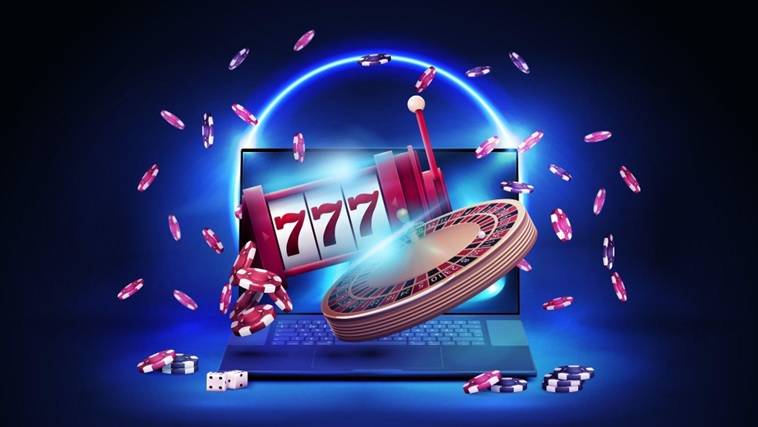
The best part of using an online Bitcoin casino, as opposed to traditional online casinos, is certainly the significantly reduced queue time between clicking that Withdraw button and your hard-earned winnings finally appearing in your bank account. Regular casinos need to go through a lot of checks and verifications before they give you even a penny to comply with banks and money laundering regulations. Crypto withdrawals take minutes – or a few hours at worst as opposed to weeks or months.
BitStarz Casino boasts a solid and experienced support system, available via live chat, email, or phone. An extensive FAQ section is also provided. The platform prioritizes user safety by implementing excellent security measures.
Are all cryptocurrencies mined
Bitcoin is the first and the most well-known mineable cryptocurrency. Launched in 2009, Bitcoin uses a Proof of Work (PoW) consensus mechanism. Mining Bitcoin requires specialized hardware known as ASICs (Application-Specific Integrated Circuits). These machines are specifically designed for the purpose of mining Bitcoin and are far more efficient than standard CPUs or GPUs.
An important piece of information to keep in mind is that many cryptocurrencies aren’t mined including the second largest in ether. Cryptocurrencies that don’t mine use other mechanisms to secure the network, each with their own set of tradeoffs.
Crypto mining isn’t so much a process of extraction as it is one of creation, which requires solving a complex mathematical puzzle via advanced computer hardware and technical expertise. Miners receive cryptocurrency rewards for their efforts in a process called proof-of-work. This leads to the mining of a block, which is then appended to the end of the blockchain.
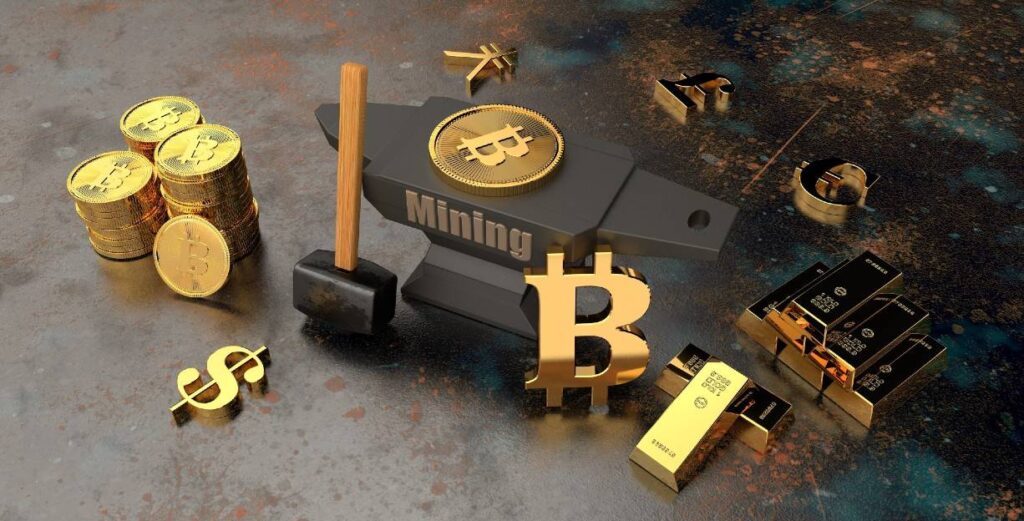
Bitcoin is the first and the most well-known mineable cryptocurrency. Launched in 2009, Bitcoin uses a Proof of Work (PoW) consensus mechanism. Mining Bitcoin requires specialized hardware known as ASICs (Application-Specific Integrated Circuits). These machines are specifically designed for the purpose of mining Bitcoin and are far more efficient than standard CPUs or GPUs.
An important piece of information to keep in mind is that many cryptocurrencies aren’t mined including the second largest in ether. Cryptocurrencies that don’t mine use other mechanisms to secure the network, each with their own set of tradeoffs.
Crypto mining isn’t so much a process of extraction as it is one of creation, which requires solving a complex mathematical puzzle via advanced computer hardware and technical expertise. Miners receive cryptocurrency rewards for their efforts in a process called proof-of-work. This leads to the mining of a block, which is then appended to the end of the blockchain.